Can You Get Flu, COVID and RSV Shots in One Visit?

Written by
Shabnam TaherniaShabnam Tahernia on LinkedInHead of Content
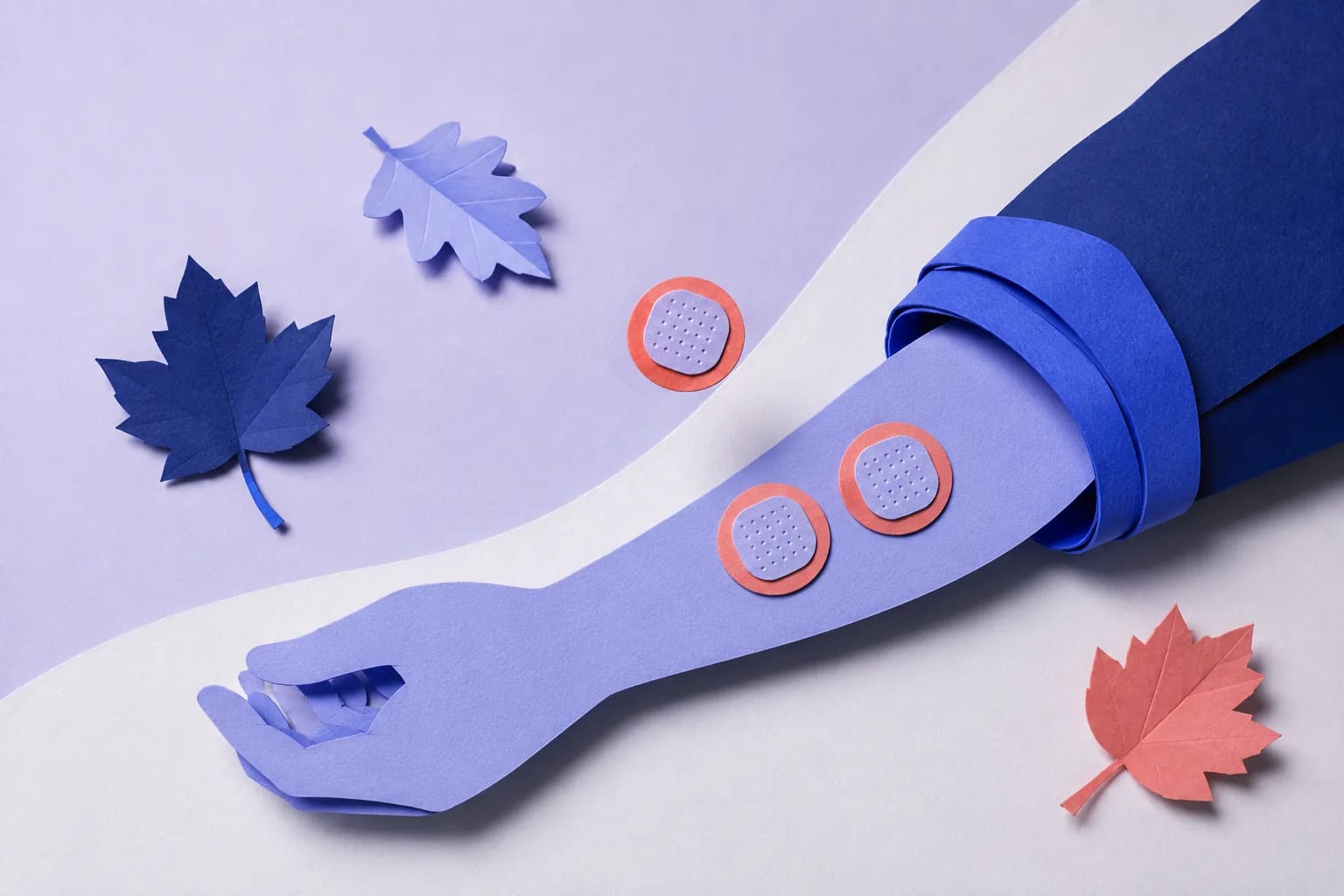
Short answer, yes. Getting more than one vaccine at a single appointment is standard practice in the United States, and the CDC says vaccines given by needle at the same visit should go at separate places on the body, at least one inch apart. Studies support giving a flu vaccine and a COVID-19 vaccine at the same visit, and co-administration of flu and RSV vaccines was also studied in clinical trials.
The longer answer is the part most pages skip. Safety is settled enough that it barely makes news anymore. What actually makes people pause at the check-in desk is arithmetic. Three vaccines means three needles, usually inside the same five minutes, from the same person, at the same little table. That is a different question from "is it safe", and it deserves a real answer too.
What is actually on offer this fall
The 2026-2027 flu vaccine is not last year's. The CDC notes that all three virus components were updated, including a change aimed at the influenza A(H3N2) subclade K virus that spread widely last season.
The advisory picture is unusual this year. With the federal advisory committee sidelined, four physician groups, the American Academy of Pediatrics, the American Academy of Family Physicians, the American College of Obstetricians and Gynecologists, and the American Medical Association, released joint fall and winter vaccination guidance on September 2, 2026 alongside the University of Minnesota's Vaccine Integrity Project. As STAT reported, the recommendations largely track what came before. October is flagged as the best month for a flu shot, because effectiveness fades across the season, and ACOG extended the RSV vaccination window in pregnancy through March 1.
There is also a genuinely new product on the shelf. On August 5, 2026 the FDA approved mFLUSIVA, the first mRNA-based seasonal flu vaccine, for adults 50 and older. Its label lists the familiar injection site reactions, pain, tenderness, hardness, redness, and swollen lymph nodes in the same arm.
Which of these applies to any one person is a conversation with their own clinician, not something a blog post can settle.
Is it safe to get several shots at once
The CDC's position is that giving more than one vaccine at the same visit is preferred, because it keeps people up to date without extra trips. On side effects, it is refreshingly specific. People who got a flu vaccine and a COVID-19 vaccine together were slightly more likely to report fatigue, headache, and muscle ache than people who got the COVID-19 vaccine alone, and those reactions were mostly mild and short lived. Injection site reactions can be a bit more common when flu and RSV vaccines are given together than with flu alone.
So it is a small trade, not a free lunch. Slightly more chance of a rough evening, in exchange for one trip instead of three. Plenty of people take that deal happily. Some do not, and spacing visits out is also a legitimate choice to raise with a clinician.
Where do the needles actually go
This is the question nobody answers, and it is the one people are quietly picturing.
Injections at the same visit go in separate sites, ideally at least an inch apart, so that if a lump or a red patch shows up later, it can be traced to the right vaccine. For an adult getting three, that usually means both arms are in play, and the deltoid can take more than one injection when needed.

For infants and younger children, the thigh is preferred when more than two injections are being given, simply because there is more muscle there, and the sites are spaced so reactions can be told apart.
None of that changes the experience much, but knowing it does. A lot of the distress in a multi-shot visit comes from not knowing how many are left.
Does it matter which arm
There is real research here, and it is more interesting than useful.
A 2025 study in Cell, from the Garvan Institute of Medical Research and the Kirby Institute at UNSW Sydney, found that macrophages in the lymph node draining an injection site get primed by a first dose and then help memory B cells respond faster when a booster lands in the same place. In the human part of the work, 30 volunteers received Pfizer-BioNTech COVID-19 doses, 20 in the same arm both times and 10 in the opposite arm. The same-arm group produced neutralizing antibodies noticeably faster, within the first week, with better activity against Delta and Omicron variants. By week four the two groups had evened out.
Worth reading carefully. That is 30 people, and it is about two doses of the same vaccine given weeks apart. It says nothing about which arm to give a flu shot versus a COVID shot on the same afternoon. For a same-day trio, the arm question is a comfort question, which side you sleep on, which shoulder carries the bag, which arm a toddler prefers to keep free.
Does the order of the shots matter
Possibly, and there is a randomized trial to point at. In a 2009 study published in Archives of Pediatrics and Adolescent Medicine, researchers at the Hospital for Sick Children in Toronto randomized 120 infants to receive either the DPTaP-Hib vaccine first or the pneumococcal conjugate vaccine first. Overall pain scores across both injections were lower when DPTaP-Hib went first, on both a videotaped behavioural scale and parents' own ratings. The authors recommended that order.
One trial, one specific pair of infant vaccines, and it does not transfer neatly to an adult getting flu, COVID and RSV. What it does show is that sequence is a variable rather than an accident, and some clinics do think about it.
What makes a three shot visit easier
Little of this is complicated. Most of it is about removing surprises.
- Knowing the number in advance. Three, told at the start, lands better than a third one appearing after you thought you were done.
- Being told what is happening rather than counted down to. Many people find a countdown makes the wait worse, not better.
- Comfort positioning for children. Many clinics now seat children upright on a parent's lap rather than laying them flat, which tends to feel less like being restrained.
- For infants, feeding or a sweet solution just before the needle is common practice in a lot of clinics.
- Numbing options exist. Whether one suits a given person and vaccine is a question for the clinician, and it is a reasonable one to ask when booking.
- Somewhere else for attention to go. A phone, a window, a conversation, anything that is not the tray.
- Not bolting for the door. A few minutes seated afterwards is standard practice for a reason, especially for anyone who has felt faint before.

If a child is the one facing three needles, our guide on helping a child who is scared of shots goes deeper, and seven ways to feel calmer before a shot covers the adult version.
If needles are why this keeps getting postponed
A lot of unbooked flu shots have nothing to do with vaccine opinions. Someone simply does not want to sit in that chair, and October turns into January.
That is common enough to be unremarkable. Fear of needles does not check your age, and plenty of adults quietly avoid appointments for years without ever saying why. The anticipation is usually the heavy part, which is why needles feel bigger before they happen than during.
Telling the person with the syringe is not an imposition. It is useful information. If you have felt lightheaded before, saying so changes what they do, and clinics have well practiced routines for exactly that.
What this season looks like from the clinic side
Fall is the densest needle season of the year. Flu clinics, school catch-up immunizations, travel vaccines, walk-ins, and now a fall trio for many adults. Every visit that runs long because someone froze, or came back a second time for the shot they skipped, costs the schedule more than the two minutes it looks like. We wrote about running a flu shot clinic that stays on schedule and about the two minutes that decide whether a patient comes back.
Some clinics are adding a comfort layer to the moment itself. SendorVR is one option. A nurse starts a short VR activity, thirty seconds to three minutes, on a headset the clinic keeps at the station. It puts the tray and the needle out of view and gives attention somewhere kinder to go while the shots happen. It is a comfort and engagement amenity, not part of anyone's care. Talk to us about your clinic if that sounds useful for your season.
Common questions
Can I get flu, COVID and RSV vaccines all at the same visit?
Co-administration at one visit is standard practice, and the CDC says giving more than one vaccine at the same clinical visit is preferred because it helps keep people up to date. Whether all three are recommended for a specific person depends on age, pregnancy, and health history, so it is a conversation with a clinician.
Will I have worse side effects if I get them together?
Slightly more likely, and usually mild. The CDC reports that people who received flu and COVID-19 vaccines together were a little more likely to report fatigue, headache and muscle ache than those who got the COVID-19 vaccine alone, and that those reactions were mostly mild and passed quickly.
Will they all go in the same arm?
Usually not. Injections given at the same visit are placed at separate sites, ideally at least an inch apart, so that any local reaction can be linked to the right vaccine. For an adult getting three, both arms are typically used.
Is there a best month to get a flu shot?
The joint guidance released in September 2026 by the AAP, AAFP, ACOG and AMA with the Vaccine Integrity Project points to October, since vaccine effectiveness can fade over the course of the season.
What if I am afraid of needles?
Say so when you book and again when you sit down. It is common, staff hear it constantly, and it changes practical things: whether you are seated or lying down, how much warning you get, how long they ask you to stay afterwards.

