How to Run a Flu Shot Clinic That Stays on Schedule

Written by
Shabnam TaherniaShabnam Tahernia on LinkedInHead of Content
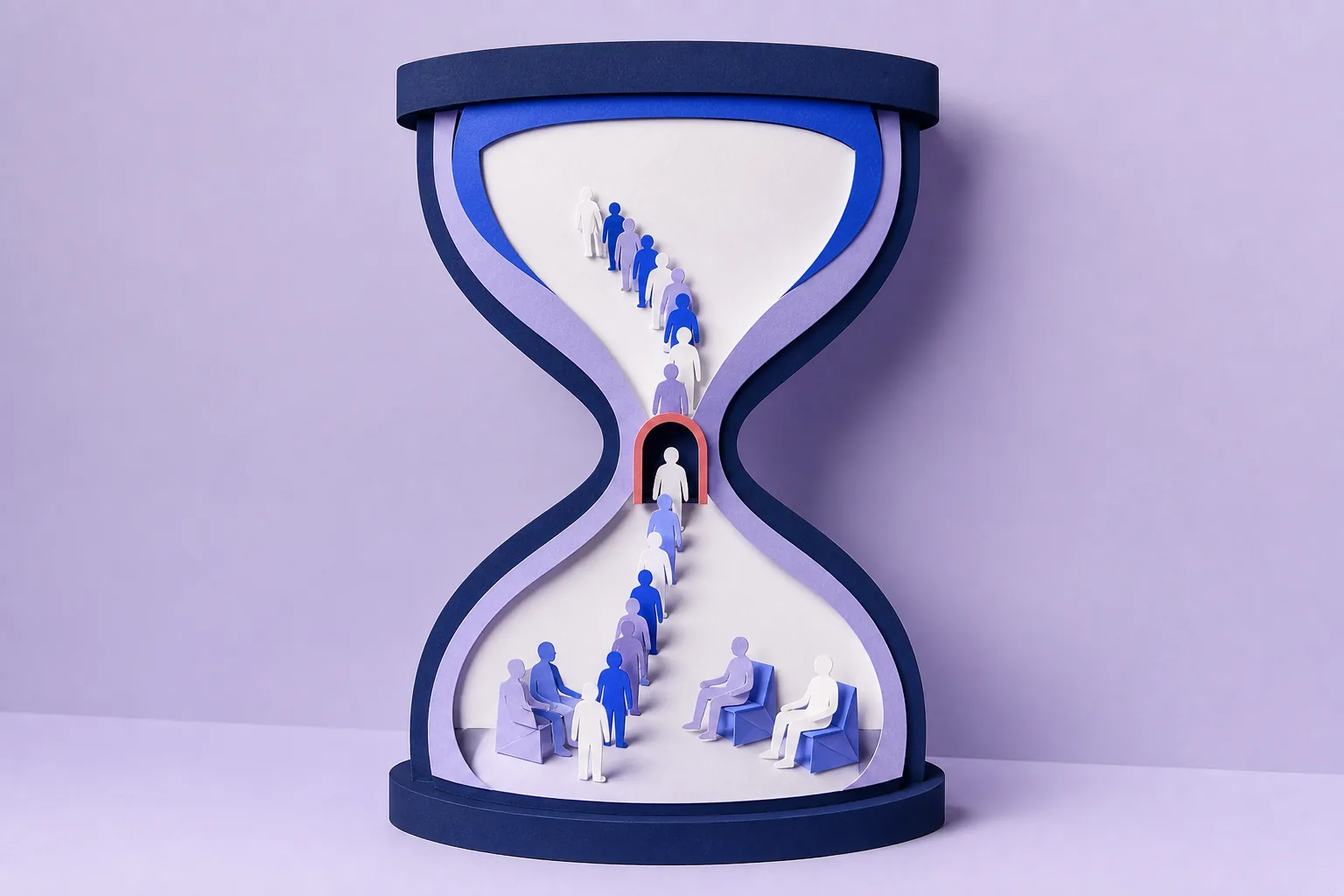
A flu clinic falls behind for boring reasons and for interesting ones. The boring reasons get solved on paper before the first dose leaves the fridge: how many people you can move through a room in an hour, how many hands you have, and whether the paperwork travels with the person or waits for them at a desk. The interesting reason shows up around the fortieth arm of the morning, when a twelve year old locks up in the chair, or an adult who was completely fine four seconds ago goes grey and needs a recovery chair for twenty minutes.
So the short version. Fix the flow so the room only moves one way, finish registration and consent before people arrive, give one staff member the explicit job of the people who need more time, and size the observation area as though you fully expect to use it. Everything below is the longer version, with the arithmetic.
Pick the dates before you pick anything else
Timing sets the volume, and the volume sets everything else. CDC guidance for the 2026 to 2027 season holds the same window it has used for years: September and October are the best months for most people, ideally with the shot done by the end of October, and routine vaccination before September is generally not recommended for most groups. Vaccination continues as long as flu is circulating, but the bulk of your demand is compressed into about eight weeks.
That compression is the whole operational problem. The American Academy of Pediatrics suggests picking days and times that are actually convenient for the people coming, including evening hours and weekends where possible. There is a second benefit that has nothing to do with convenience. A dedicated flu session keeps a hundred well people out of a waiting room full of sick visits, which is better for both queues.
One direction, three stations, no backtracking
The highest yield layout decision is that the room moves one way. Separate entrance and exit if the building allows it, signs at every decision point, and three clearly marked stations: check in, administration, observation. Vaccine preparation sits beside the path, not in it.
If you are giving more than one vaccine that day, assign different staff to prepare and administer each product. That is an error-prevention measure first, and it happens to keep the stations from tangling.
A room that lets people wander back to ask a question is a room that gets metered by whoever is most confused. One direction removes that failure mode without anyone having to be firm about it.
Move the paperwork out of the room
The injection takes well under a minute. Everything you are actually scheduling is the material around it, so push as much of that material as you can to before the door.
- Consent forms, insurance details and screening questions completed at booking or emailed ahead, not filled in on a clipboard in the queue.
- Chart labels prepared in advance with the vaccine name, manufacturer, lot number, expiration date and site, leaving only initials and a time to write.
- Sleeves. Genuinely. A line note asking people to wear a short sleeve or loose top saves a surprising number of small delays.
What actually stalls the line
Most flu clinic guides stop at signage and staffing. They leave out the variable that costs the most minutes, because it is the one nobody can schedule: the person who is frightened.
It is not a rare category. A systematic review and meta-analysis by McLenon and Rogers pooled 119 studies and found needle fear in the majority of children, 20 to 50 percent of adolescents and 20 to 30 percent of young adults. The same review reported that 16 percent of adult patients and 27 percent of hospital employees said they had avoided influenza vaccination specifically because of it. Everyone standing in your line is, by definition, someone who came anyway. A fair number of them are white knuckling it.
One distressed child at the administration chair does not slow the clinic by the length of the distress. It stops the station entirely, because the nurse cannot do the next arm while negotiating with this one, and the queue behind keeps arriving at its original rate. Two of those in a morning is a schedule.
The fix is unglamorous: plan for it as an expected event rather than an exception. Name one person as the float whose job is the people who need more time, give them somewhere slightly out of the main flow to work, and let the main station keep moving. Clinics that do this are not kinder than the ones that do not. They are just better at protecting the line.
Comfort does not have to cost time
There is a research literature here, and it is refreshingly operational. Anna Taddio's group in Toronto built a framework called CARD, for Comfort, Ask, Relax, Distract, which reorganises how a vaccination session runs rather than adding anything to it.
In a cluster randomised trial across 40 schools with 1,919 grade 7 students, researchers reported lower fear and pain in the CARD schools, with odds ratios of 0.65 and 0.62, and no students fainting in CARD schools compared with 0.8 percent in the control group. Dizziness and post vaccination reactions did not differ.
A larger pragmatic trial in Calgary is the honest counterweight. Across 8,839 children in 105 schools, fear was lower by about half a point on a 0 to 10 scale, while other symptoms and immunisation rates did not differ. Real effect, modest size. Anyone selling you a dramatic one is selling you something.
The finding most relevant to a clinic manager came from community pharmacies. Across 25 Ontario pharmacies and 2,206 vaccine recipients, 48.8 percent in the CARD group rated the experience better than their last vaccination against 28.0 percent in the control group, and the vaccinators themselves reported that CARD was overall time neutral. That is the line worth carrying into planning. A structured approach to comfort is not a tax on throughput, at least where it has been measured.
The observation chairs are a throughput decision
ACIP guidance is that providers should strongly consider observing people for 15 minutes after vaccination, seated or lying down, particularly adolescents, since about 80 percent of reported syncope episodes happen within that window.
Most clinic plans treat that as a safety footnote. It is also a queue with a fixed service time, and it obeys arithmetic. If you are moving 60 people an hour and each of them sits for 15 minutes, you need roughly 15 seats occupied at steady state. Twelve chairs and a plan for 60 an hour is not a comfort problem, it is a bottleneck that will back up into your administration station by mid morning.
Count the chairs against your target rate before the day, keep them in sight of a staff member, and keep the walk from the chair to the exit short. We went deeper into the practical side of this in how to keep patients from fainting during blood draws.
Run a five minute debrief after the first session
The first clinic of the season is the measurement. Have someone tally arrivals in 15 minute blocks, mark where the line physically formed, and note how many people needed extra time and how long they took. Three data points, gathered once, and the second session reschedules itself.
Worth remembering what the day buys you beyond the doses, too. People decide how they feel about a practice in a very small window around the sharp part of a visit, a pattern we looked at in the two minutes that decide if a patient comes back. A flu clinic is often the only time a healthy family sees you all year.
Where SendorVR fits
SendorVR is a non-clinical comfort amenity built for exactly this kind of moment. A nurse hands over a headset, starts a short activity lasting 30 seconds to a few minutes, and the person in the chair has somewhere else for their attention to go while the sleeve goes up. It keeps the stressful sights out of view and is designed to make a brief, unloved appointment a little friendlier.
If you are planning flu sessions for this autumn and want to see what that looks like in a real line, book a demo.
Frequently asked questions
When should a clinic schedule its flu vaccination sessions?
CDC guidance points at September and October as the best months for most people, ideally with the shot done by the end of October. Practically, book the sessions before vaccine arrives and keep offering vaccination into November and beyond, since flu commonly peaks well after the main push.
How many staff do you need to run a flu clinic?
Think in roles rather than headcount. A greeter who sorts arrivals, registration, one or more vaccinators, someone watching the observation area, and a float for the people who need more time. A small practice can combine several of these into one person, but the float is the role most often skipped and most often missed.
How long should someone stay after a flu shot?
ACIP recommends that providers strongly consider a 15 minute observation period, with the person seated or lying down, because the large majority of fainting episodes after vaccination happen inside that window. Many clinics apply it to everyone at busy sessions simply because it is easier than deciding case by case.
What do clinics do when a child is too frightened for the shot?
Common practice is to move them out of the main flow rather than press on at the station, let them choose something about how it happens, and give a parent a job to do. Research on structured comfort frameworks suggests that letting the child pick their own coping strategy matters more than which strategy it is. Our guide on helping a child who is scared of shots covers the specifics.

