
Backed by Science
How Immersion Can Change the Experience of a Procedure
Research suggests that immersive virtual reality can redirect attention during brief procedures and may help reduce reported pain, fear and anxiety in some settings. SendorVR draws on these principles to create short experiences that work alongside standard care.
Why Immersion May Help
Virtual reality combines visual, auditory and interactive elements to create a strong sense of presence, giving the person something beyond the procedure to focus on.

Attention can be redirected
During a procedure, bodily sensations, emotions and the surrounding environment compete for attention. VR introduces another experience for the person to focus on.
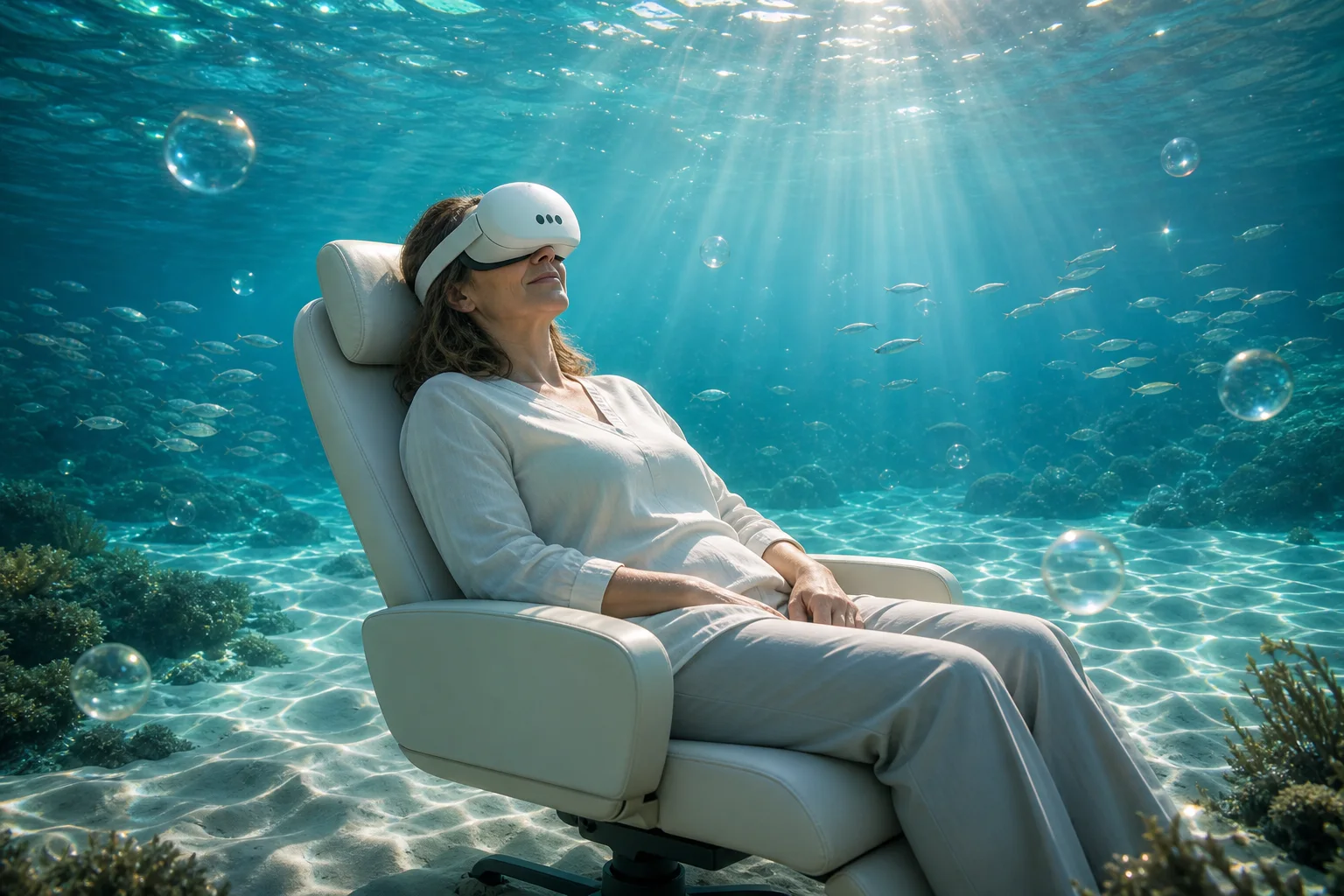
Presence strengthens engagement
The feeling of being inside a virtual environment is known as presence. Experimental research has associated stronger presence with greater reductions in reported pain.

Interaction helps sustain attention
Visuals, sound and simple interaction can work together to maintain engagement during a short procedure. Research suggests that interaction can strengthen presence and attentional diversion.
What the Studies Found
A selection of peer-reviewed evidence on virtual reality in clinical settings. Every citation links to the original publication.
Meta-analysis · 2019
Needle fear affects 20-30% of young adults and the majority of children, and drives measurable vaccine avoidance.
119 studies reviewed. Avoidance of influenza vaccination due to needle fear was reported by 16% of adult patients and 27% of hospital employees.
McLenon & Rogers, Journal of Advanced NursingRead the publication(opens in a new tab)
Meta-analysis · 2024
VR distraction was associated with reduced pain, fear and anxiety in children during needle procedures.
21 studies and 2,663 participants. Reductions were reported across standardized pain, fear and anxiety scales, though the researchers also reported substantial variation between studies.
Cáceres-Matos et al., Nursing ReportsRead the publication(opens in a new tab)
Read our breakdown of this studyFeasibility pilot · 2024
A small feasibility pilot found VR acceptable for many children with needle phobia.
In a study of 30 children, 90% were successfully immunised. Among the 17 who used VR during immunisation, 16 reported a more positive experience. The authors recommended a randomized trial to evaluate effectiveness.
Makhijani et al., VaccineRead the publication(opens in a new tab)
Research program · Univ. of Washington
Studies in burn care have reported lower pain scores during wound care inside immersive VR.
Two decades of VR analgesia research, including imaging studies of pain-related brain activity during immersion. The findings come from specialist research settings rather than routine clinical care.
Hoffman & Patterson, Human Photonics LabRead the publication(opens in a new tab)
Want the numbers behind the studies?
Thirty verified figures on how common needle fear is, what it makes people avoid, and what the VR trials found, each linked to its source.
Designed Around the Procedure Window
Research has examined VR immediately before and during needle-related procedures. SendorVR is designed around that same focused window while leaving clinical care unchanged.
Quick to begin
Designed for brief preparation by staff.
Focused experiences
Content is created for short, routine procedures.
Staff controlled
Staff decide when the experience starts and stops.
Alongside standard care
All clinical timing and decisions remain with the care team.
Made for vaccinations, blood draws, IV starts and injections, in clinics, hospitals, pharmacies, blood donation centers and dental clinics.
How Research Informs the Design
The evidence provides design principles, not product-specific proof. These principles guide how SendorVR is built and used.
Procedure-focused experiences
Content is designed for the brief period before and during a routine procedure, reflecting how VR has been studied in needle-related care.
Designed for sustained attention
Visual, auditory and interactive elements work together to maintain engagement without requiring a long session.
Staff-controlled use
Staff control when the experience starts and stops. All clinical decisions remain with qualified professionals.
A non-clinical comfort aid
SendorVR is intended to support comfort and engagement alongside standard care. It is not a treatment or a substitute for clinical judgment.
Scientific limitations and product boundaries
Current evidence suggests that VR can be a useful distraction approach during needle-related procedures, particularly for children. Results vary between studies, and further high-quality research is needed. The research presented here evaluates virtual reality generally, not SendorVR specifically.

See How SendorVR Works in Your Clinic
Book a short demo with our team to see how SendorVR can be deployed in your environment.