How VR Exposure Therapy Works, From Spiders to Needles

Written by
Shabnam TaherniaShabnam Tahernia on LinkedInHead of Content
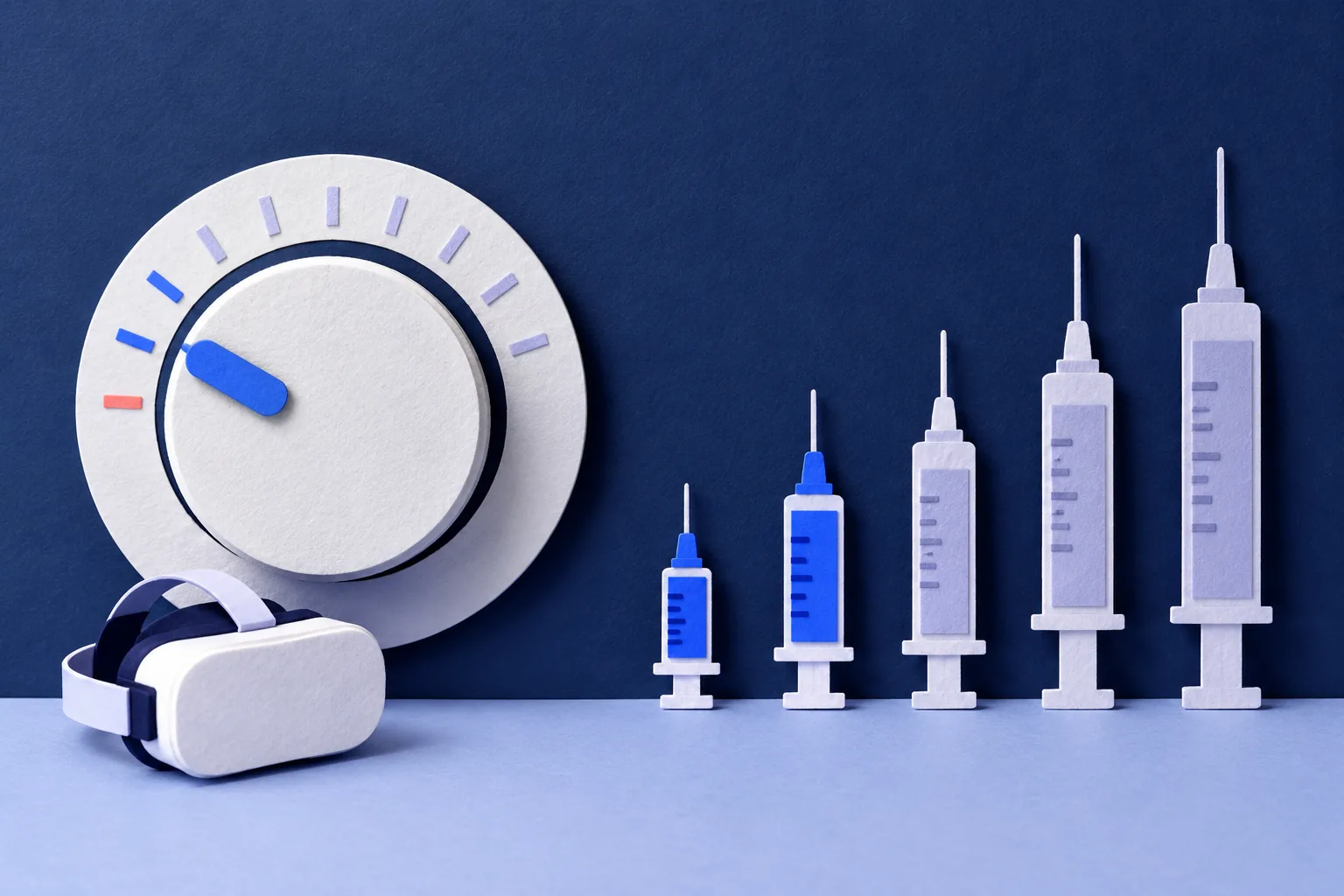
VR exposure therapy is exposure therapy with a headset. A person faces a simulated version of the thing they fear, in small planned steps, while a therapist (or, increasingly, a piece of software) decides how close they get and how fast. The spider, the balcony, the airplane cabin or the needle is not real, but the body tends to react as if it were, and that reaction is the raw material the therapy works with.
It has been studied for about three decades, mostly for fear of heights, flying, spiders and public speaking. In July 2026 it got its most interesting result yet for one of the most common fears of all: a randomized trial from the University of Oxford reported that an automated VR program substantially reduced needle fear in teenagers. Here is how the approach works, what it has been tested on, and what that new needle trial did and did not show.
What is VR exposure therapy?
Exposure therapy is one of the best studied treatments in psychology. The idea is simple and uncomfortable on purpose: avoiding a feared thing keeps the fear alive, so the person approaches it gradually, stays with the discomfort until it settles, and repeats. Over time the brain learns that the feared outcome does not arrive, or is survivable when it does.
Virtual reality exposure therapy, often shortened to VRET, swaps the real stimulus for a simulated one shown in a head-mounted display. The appeal is practical. A therapist cannot summon a thunderstorm at 30,000 feet on a Tuesday afternoon, pause it, and run it again at half strength. In VR they can. The scene is private, repeatable, and adjustable down to small details, like how close the dog stands or whether the needle has a cap on.
A 2021 systematic review in Frontiers in Psychiatry that pulled together practical lessons from the VRET literature found headsets were used in about 71 percent of studies, and noted that people tend to feel immersed in a virtual scene within roughly two minutes. That sense of presence matters: if the scene does not feel real enough to stir some fear, there is nothing for the exposure to work on.
How does a VR exposure therapy session work?
Most programs, human-led or automated, follow the same basic shape.
- Assessment and explanation. What exactly is feared, what gets avoided, and why exposure works. Understanding the logic tends to make the hard parts feel purposeful rather than cruel.
- A fear ladder. The person and therapist rank situations from mildly uncomfortable to the worst case. For flying that might run from watching a plane take off, to boarding, to turbulence.
- Rating as you go. Distress is usually rated on a simple scale, often 0 to 100, so both sides can see when a step has gone from frightening to boring.
- Stepping up. When a rung stops producing much fear, the scene moves to the next one. The therapist typically sees what the person sees on a monitor and can slow things down at any point.
- Taking it outside. Many programs finish with real-world practice, because the goal is a calmer life, not a calmer headset.
How long it takes depends on the fear. The same review reported that specific phobias often respond to a single longer session of 45 minutes to three hours, while agoraphobia and social anxiety have typically needed 8 to 12 weekly sessions of at least 15 minutes.
Which phobias has VR exposure therapy been studied for?
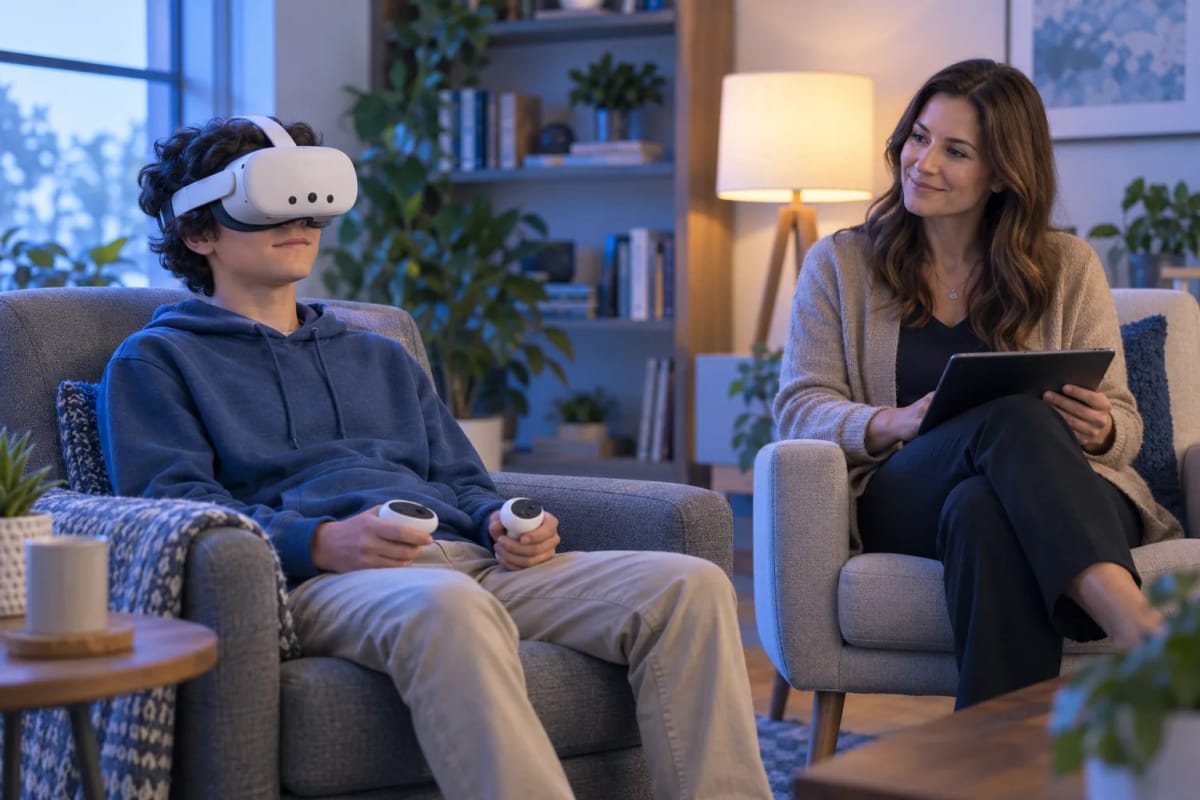
The list is longer than most people expect. Fear of heights, flying, spiders and other animals, enclosed spaces, driving, public speaking and social situations have all been tested, along with panic disorder and post-traumatic stress, where VR scenes recreate combat or accident settings.
Some of the most striking results come from programs with no therapist in the room. In a 2018 trial in The Lancet Psychiatry, 100 adults with a fear of heights were randomized to either usual care or an automated VR program guided by a virtual coach, delivered in roughly six 30-minute sessions over two weeks. The VR group's fear scores dropped far more than the control group's, an effect size of d = 2.0 that held at follow-up, and no adverse events were reported.
VR has also been used for military trauma for well over a decade. The photo below, from a 2011 demonstration at Joint Base Lewis-McChord, shows how much bulkier the equipment was before today's standalone headsets.

Does VR exposure therapy actually work?
For specific phobias, the evidence is solid. A 2019 meta-analysis by Carl and colleagues pooled 30 randomized trials with 1,057 participants and found a large effect for VRET compared with waiting lists (g = 0.90), and no significant difference compared with exposure to the real thing (g = -0.07). The authors called it an effective and equal medium for exposure therapy.
There are honest caveats. The same analysis found that bigger trials produced smaller effects, a classic sign of early enthusiasm cooling. Most studies are small and follow people for weeks or months rather than years, and head-to-head trials suggest real-world exposure may still have the edge for social anxiety. We went through those numbers in detail in Does Virtual Reality Actually Work for Phobias.
Why fear of needles is a special case
Needle fear is extremely common. A 2019 systematic review in the Journal of Advanced Nursing estimated it at 20 to 50 percent of adolescents and 20 to 30 percent of young adults, and found it was a reason some adults skipped their flu shot. At its most severe it is classed as blood-injection-injury phobia, and it behaves differently from most phobias.
With spiders or heights, the body revs up and stays revved. With needles and blood, many people get a rise in heart rate followed by a sudden drop that can end in dizziness or fainting. That is why the classic psychological approach for this fear adds a physical skill called applied tension: tensing the large muscles of the arms, legs and torso to keep blood pressure up. It was developed in Sweden in the late 1980s, and a 1991 trial by Öst and colleagues compared it with in-person exposure. We cover the fainting side in more depth in how clinics handle fainting during blood draws.
Needles are also awkward to practise with in real life. Nobody can ethically give someone twenty injections in an afternoon to work up a fear ladder. A headset can show a needle, a drop of blood, or a vaccination as many times as needed, at whatever distance the person can tolerate today.
What the 2026 Oxford needle trial found
The trial, led by Professor Daniel Freeman and published in eClinicalMedicine in July 2026, is the first randomized trial of a VR therapy for needle fear in young people. The team built an automated program on a standalone Meta Quest 3 headset, set inside a virtual school, with a virtual coach called Farah explaining needle fear, teaching applied tension and offering encouragement.
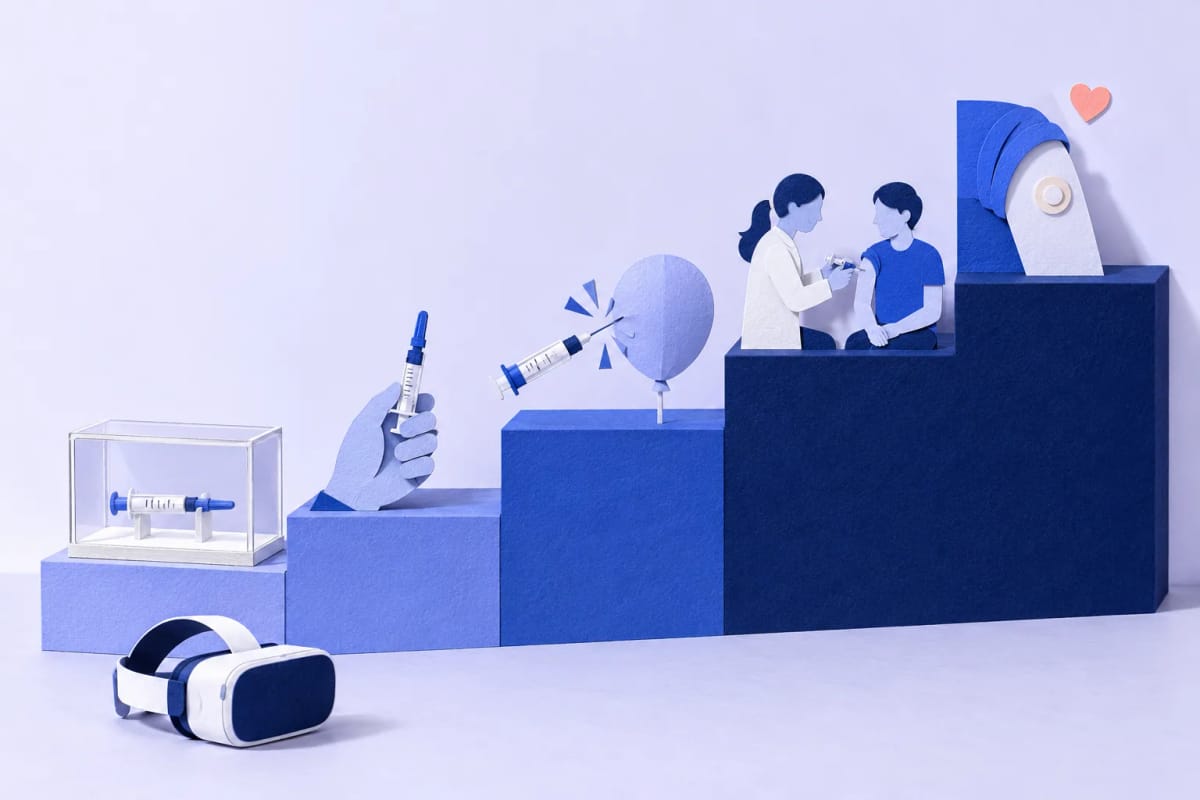
The exposure is a five-level ladder that runs along the school's main corridor:
- looking at needles in display cases
- picking needles up
- using them, from popping balloons to giving a virtual penguin an injection
- watching another person being vaccinated
- a final scene in the school gym where a nurse gives a vaccination into the user's own virtual arm
Sixty adolescents aged 12 to 15 with significant needle fear were randomized to the VR therapy or no treatment. The program took about two to three hours in the headset, spread over roughly three sessions in two to three weeks, done sitting down with a psychologist present. Compared with the untreated group, needle fear scores fell substantially (Cohen's d = 1.34) and the improvement held at six weeks (d = 1.39), with no serious adverse events.
What it did not show is just as important. The outcome was self-reported fear, not whether anyone actually went on to get vaccinated. It was a single site, the sample was 95 percent White, and follow-up ended at six weeks. The authors call for a larger Phase III trial, with a key question being whether the program increases vaccine uptake among young people who had refused because of needle fear. The Oxford Health announcement notes the program is designed so it could eventually be offered at scale.
Other VR needle studies worth knowing
The rest of the needle literature is smaller and more mixed, which is useful context for the Oxford result.
- A 2020 pilot trial by Jiang, Upton and Newby tested a single therapist-guided VR session for blood-injection-injury fears in adults and reported moderate to large improvements, with the authors suggesting it may work best as a step before real-world exposure.
- A 2025 pilot in Frontiers in Psychiatry gave 32 adults one self-paced VR session. It reliably triggered anxiety during exposure, but at one month only one of two severity measures improved, and some people reported VR sickness.
- Stanford has a small study underway combining up to eight sessions of cognitive behavioral therapy with VR and augmented reality for children and teens, moving from virtual needles to sham needles and, finally, a real one.
Can you do VR exposure therapy at home?
Self-guided programs exist, and at least one has trial data. In a 2023 randomized trial in New Zealand, 126 adults afraid of flying, heights, spiders, dogs or needles used oVRcome, a smartphone app with a low-cost headset that combines VR exposure with psychoeducation and relaxation over six weeks. Phobia severity dropped more than in a waitlist group, with an effect size of 0.86.
That said, the research setups for needle fear are a useful reference point. In the Oxford trial, participants sat down specifically because of the fainting risk, and a team member was present throughout. For anyone with a history of fainting, a severe phobia, or other mental health conditions, this is a conversation for a qualified professional rather than a solo project.
What are the downsides?
- Cybersickness. Nausea, dizziness and disorientation affect some users, and were reported in the 2025 needle pilot. Modern headsets help, but not for everyone.
- It has to feel real enough. If the scene does not provoke some fear, exposure has nothing to work with.
- Access. Few therapists offer it, and insurance coverage varies widely by country and plan.
- Age limits. Headset makers set minimum ages, which is why most needle trials start at 12 or older. We explain why in why VR headsets set a minimum age.
Exposure and distraction are not the same thing
This distinction gets blurred constantly, so it is worth being precise. Exposure therapy turns attention toward the fear, deliberately and repeatedly, over a course of sessions, with the goal of lasting change. The Oxford team said as much: they wanted to target the anxiety that leads to avoidance, rather than use VR as a distraction during a procedure.
Using a headset during a jab is a different idea entirely, with its own separate body of research, which we summarized in What 21 VR Needle Studies of 2,663 Children Found.
SendorVR belongs in that second category, and only in a modest way. It is not exposure therapy and does not treat needle phobia. It is a non-clinical comfort and engagement aid that clinics can offer during a short appointment, a few minutes of somewhere pleasant for attention to go while the routine part happens. For more of the research we follow, see our science page.
Frequently asked questions
What is VR exposure therapy used for?
It has been studied most for specific phobias such as fear of heights, flying, spiders and needles, and also for social anxiety, panic disorder and post-traumatic stress. The evidence is strongest for specific phobias.
How many sessions of VR exposure therapy does it take?
It varies by fear and program. Specific phobias have often been treated in one longer session or a handful of short ones; the Oxford needle program took two to three hours in the headset over about three sessions, while social anxiety programs have usually run 8 to 12 weekly sessions.
Can VR exposure therapy help with fear of needles?
Early research is encouraging. A 2026 randomized trial in 60 adolescents reported large reductions in self-reported needle fear after an automated VR program, but it did not measure whether people went on to get injections, and larger trials are planned.
Is VR exposure therapy as effective as real-life exposure?
For specific phobias, a meta-analysis of 30 trials found no significant difference between VR and in-person exposure. For social anxiety, head-to-head trials have tended to favor in-person exposure.
Is VR exposure therapy safe?
Trials generally report few serious problems, and none were reported in the Oxford needle or heights trials. The most common side effect is cybersickness, and because needle fear can cause fainting, research programs have participants sit down with someone present.
This article discusses published research on virtual reality generally. SendorVR has not been evaluated in these studies, and no product-specific claims are made or implied. SendorVR is a non-clinical comfort and engagement aid; all medical care remains with qualified healthcare professionals.


