Why Kids Who Love Halloween Scares Still Panic at a Shot

Written by
Shabnam TaherniaShabnam Tahernia on LinkedInHead of Content
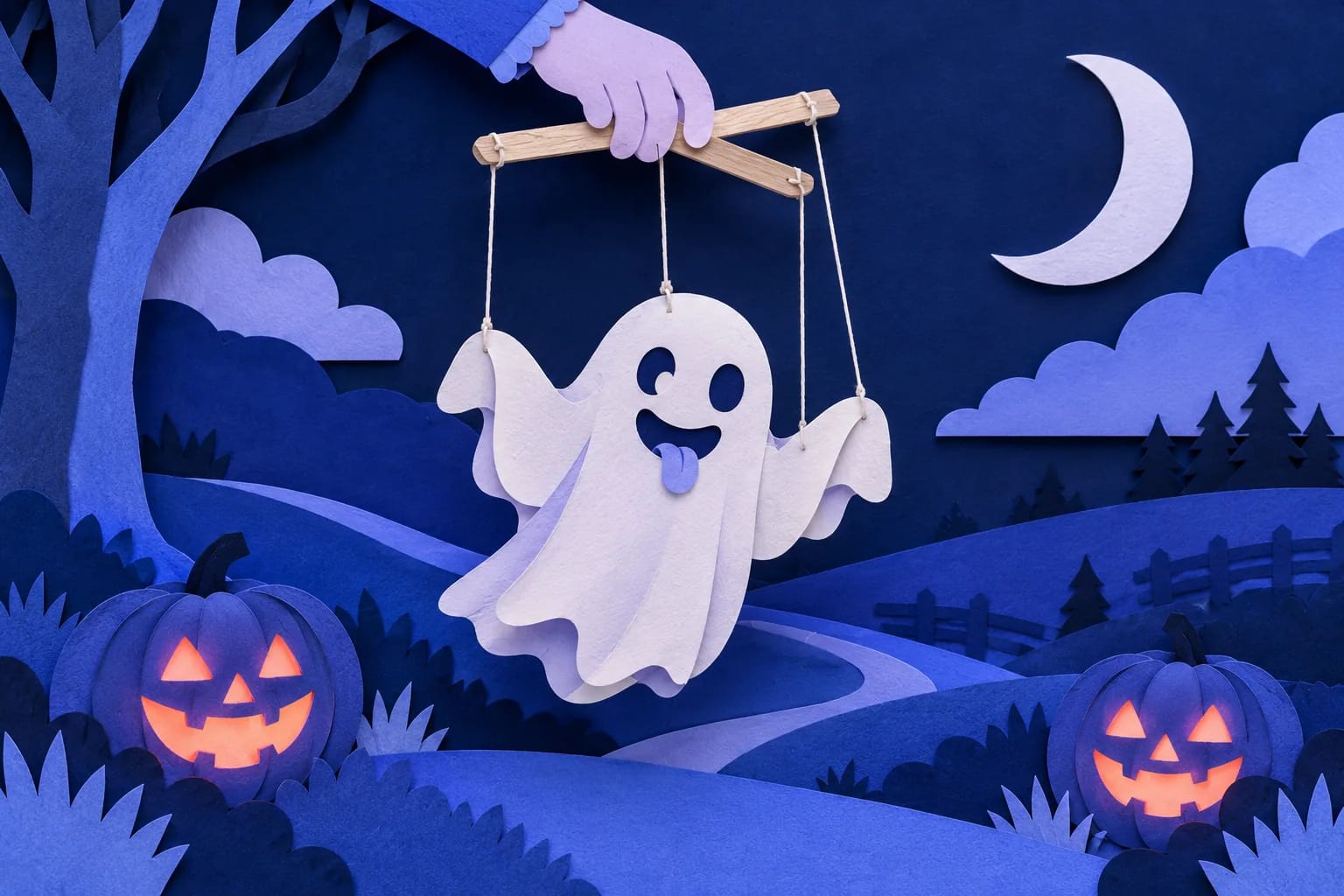
The same child who begs to go through the haunted house twice can fall apart over a two-second shot, and both reactions make sense. The difference is choice. A Halloween scare is one a child picks, it comes with a clear signal that this is play, and the child can turn it up or walk away. A shot is a fear someone else picked, on someone else's schedule, and the sting at the end is not pretend.
That gap is useful to parents and clinics, because a few of the things that make Halloween fun can be carried into an exam room: a choice or two, a role to play, and a say in where the eyes go. None of them make the needle disappear. They give a child back some of the control that a haunted house hands out for free.
Most kids like being scared, on their own terms
Enjoying a good fright is close to universal in childhood. In a 2025 survey published in Child Psychiatry and Human Development, researchers at Aarhus University's Recreational Fear Lab asked 1,600 parents and caregivers of children aged 1 to 17 about 19 kinds of scary activities. Parents reported that 93 percent of the children enjoyed at least one of them. The authors call this recreational fear: playful contact with something scary, where fear and enjoyment show up together.
Fear of needles is just as ordinary. Reviews of the research find that most children are afraid of needles, a pattern we covered in how to help a child who is scared of shots. Put the two findings side by side and the Halloween paradox stops being a paradox. Most kids are both, and the same child can be thrilled by fear on Saturday night and flattened by it on Monday morning.
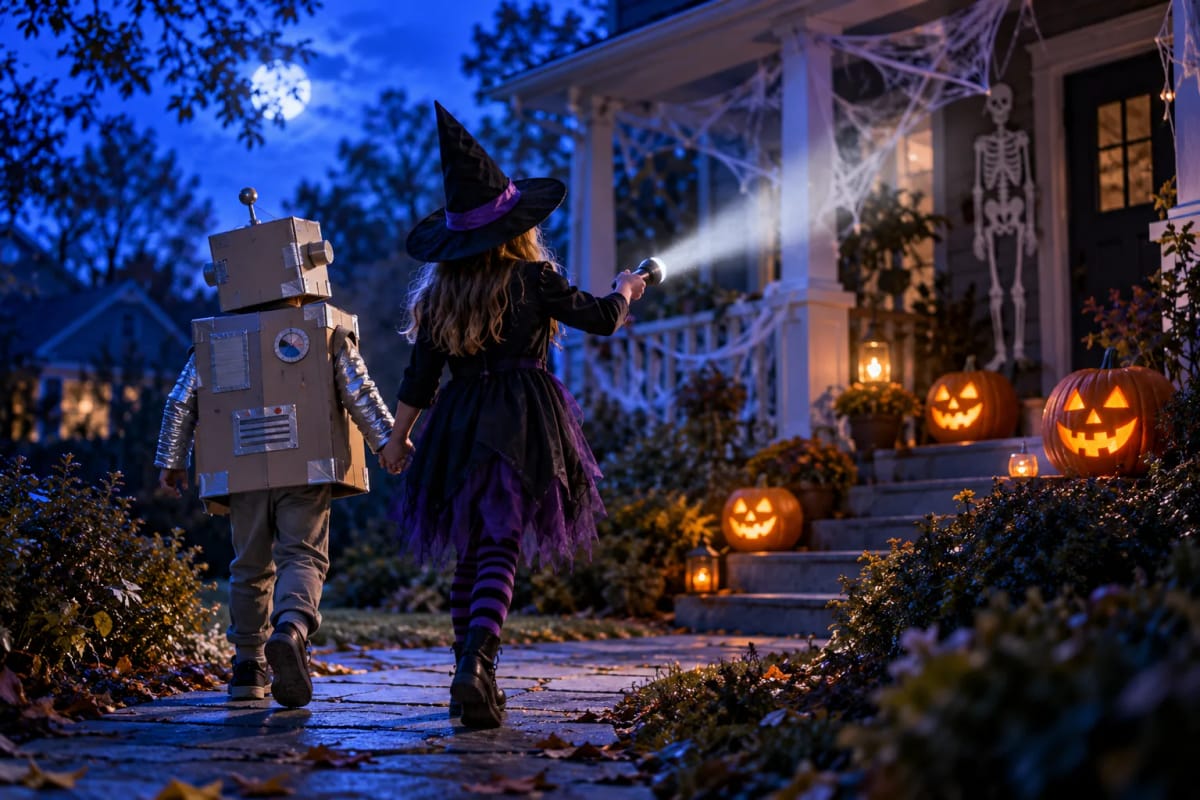
Why a haunted house is fun and a shot is not
The best evidence on why fear can be fun comes from a haunted house in Denmark. For a field study published in Psychological Science in 2020, the Aarhus team fitted 110 visitors aged 12 to 57 with heart rate monitors, filmed them at the attraction's peak scare points, and asked how frightened they felt and how much they enjoyed it. Enjoyment traced an upside-down U. Too little fear was dull, too much stopped being fun, and the most enjoyment sat in the middle. The researchers describe the fun as a level of arousal that feels "just right."
Every person in that study had chosen to walk in. They knew the monsters were actors, and the scare would end at the exit. A vaccine appointment takes away all three of those things at once. The child did not choose to come, the needle is a needle, and nobody in the room offers them a dial. From where they sit, being scared is an accurate reading of the situation.
So the useful question for the adults in the room is how to hand back a little of that control.
What a child can control at a shot
There is more room for choice in a needle visit than it first appears. Children's Health Ireland runs a program called Needle Heroes, built around a plan each child makes for themselves. The plan covers how much information they want, which comfort measures to use, which distraction techniques to try, and who they want by their side.
Position is a choice too. The Royal Australian College of General Practitioners' summary of the vaccination pain guideline from the HELPinKids&Adults group notes that for children three and older, sitting upright decreases pain and fear compared with lying flat, that a child can sit on a parent's lap or on their own, and that restraint may heighten distress.
Small choices that tend to be easy for a clinic to offer:
- Which arm gets the shot
- Sitting on a parent's lap or in the chair alone
- Watching the needle or looking somewhere else
- A countdown, or no countdown at all
- What to look at, listen to, or talk about while it happens
The one rule is to offer only choices you will honor. "Do you want your shot now?" is a trap if the answer has to be yes, and kids notice. "Do you want it now or after we finish this song?" is a real choice with a real answer.
Let the costume come to the appointment
Pretending to be someone else has some research behind it, though not at the doctor's office. In a 2017 study in Child Development nicknamed "The Batman Effect", 180 children aged 4 and 6 were asked to stick with a boring task for 10 minutes while a very tempting video game sat nearby. Children who pretended to be a hardworking character such as Batman kept at the task longer than children who thought about it as themselves. The study measured perseverance on a dull task, and we found no trial testing the idea during a shot, so treat it as an intriguing lead rather than a technique.
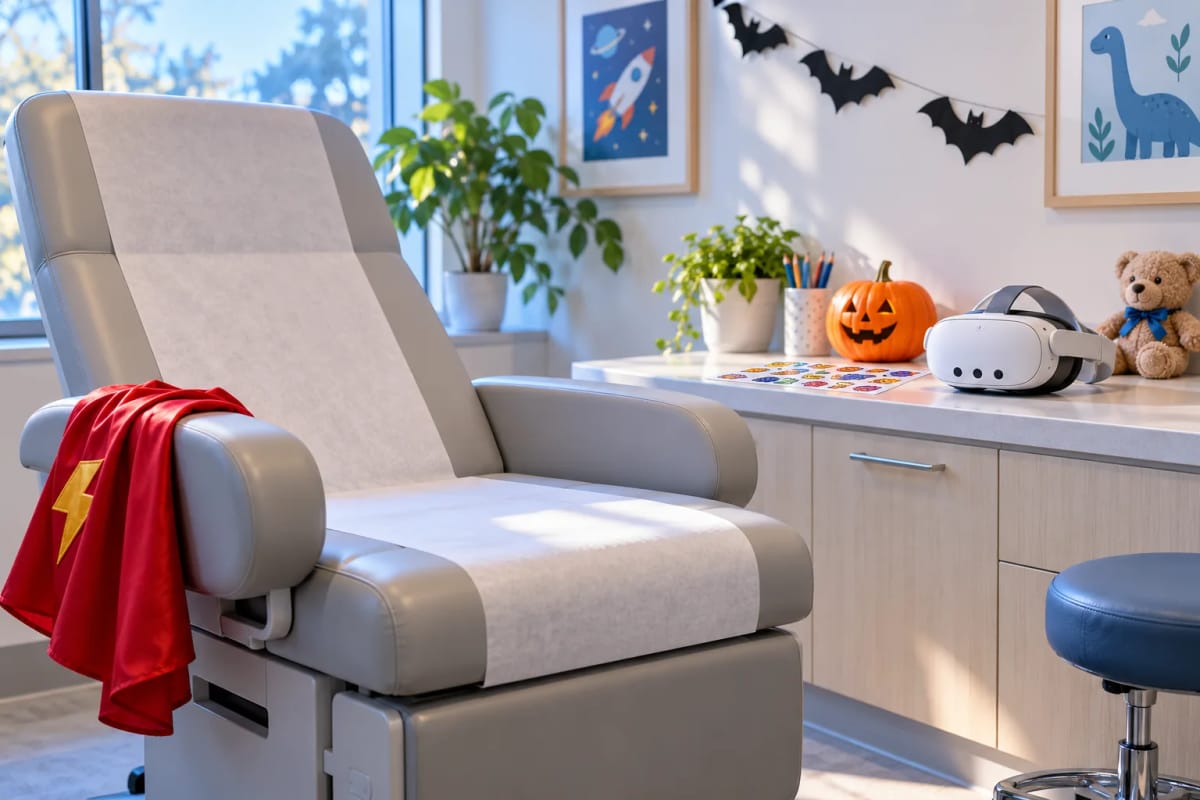
Halloween week is the one week a cape in the waiting room looks completely normal, and plenty of kids would wear it anyway. A few practical notes if a costume comes along:
- Short or loose sleeves, so the arm is easy to reach without a full costume change
- Face paint rather than a mask, so the nurse can see the child's face
- A quick check with the front desk when booking, since not every clinic has room for wings
Then let the character do some of the work. "What would a superhero do with this arm?" lands differently from "be brave for me."
Give them a say in where their eyes go
On Halloween night, the kid holding the flashlight decides what gets looked at. Clinics can borrow that too. Looking away is a legitimate choice, and it is easier with somewhere better to look. Distraction is one of the main families of options reviewed in the 2026 update to the vaccine distress guideline, and for children and teens, music came out as the preferred choice.
In the exam room that can be a song, a story, a tablet, or a parent with a very detailed question about yesterday's lunch. The point is that the child picks it, the same way they picked which porch to walk up to.
Some clinics now keep a VR headset on hand as a comfort amenity. SendorVR is one of these. It is not a medical device or a treatment; it is a comfort aid, a short activity of a few minutes that a nurse starts and ends, designed to give a child somewhere friendlier for their attention to go and to keep the needle out of view. Letting the child pick between a couple of short activities hands them one more decision. Headset makers set minimum ages for their devices, which we explain in why VR headsets set a minimum age of 10, so for younger kids the flashlight stays in a parent's hands: a story, a song, or a toy.
When it is more than a Halloween-week wobble
A child who is nervous about a shot and fine an hour later is having an ordinary reaction. A child whose fear looks like panic, flat refusal, or dread that starts days before an appointment is in a different place, and that is worth raising with the pediatrician, who can point the family toward help built for it. A costume and a choice of arm are good for a rough morning, and they are not meant to carry more than that.
Frequently asked questions
Why do kids like being scared? Researchers call it recreational fear, meaning playful contact with something scary where fear and enjoyment happen together. In a 2025 survey of 1,600 parents, 93 percent said their child enjoyed at least one scary activity. A haunted house study from the same lab found that enjoyment peaks at moderate fear, the "just right" level.
Is it normal for a child who loves scary things to be terrified of shots? Yes. Halloween scares are chosen, pretend, and easy to escape, and a shot is none of those. A child who enjoys one and dreads the other is reading the two situations accurately.
Can my child wear a Halloween costume to the doctor? Many families do during Halloween week, and it is worth checking with the clinic when booking. Pick something with short or loose sleeves for shots, and face paint instead of a mask so the nurse can see your child's face.
Should I tell my child the shot won't hurt? It is better not to. A child who is promised no pain and then feels a pinch tends to trust the next warning less. Something brief and accurate, like "a quick pinch, then it is over," holds up better, and we cover what to say in more detail in our guide for helping a child who is scared of shots.

